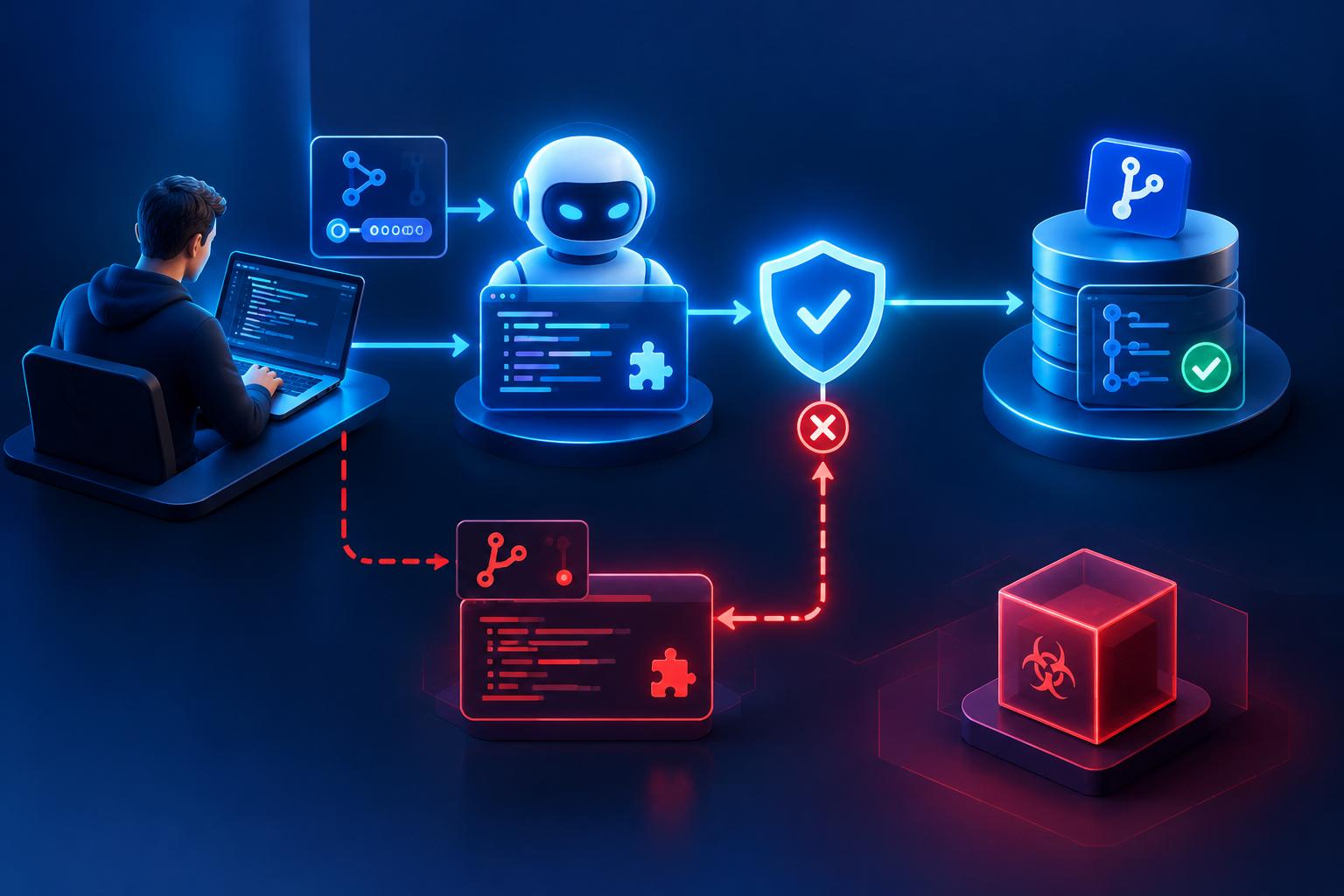
AI coding agents just exposed a new supply-chain problem
We’ve spent years learning to pin dependencies.
Now we have to make sure the thing doing the pinning actually verifies it.
A newly disclosed vulnerability called Plugin4Shell affects plugin systems used by Claude Code, OpenAI Codex, GitHub Copilot, and Gemini CLI. Researchers found that an agent could be tricked into installing code different from the commit that the marketplace intended to pin. AIR Security
The interesting part is where the bug lives.
Not in the AI model.
Not in the plugin itself.
In the supply-chain verification layer.
That matters because AI coding agents increasingly have access to:
- Source code
- Local files
- Git credentials
- Cloud credentials
- CI/CD systems
- Developer tooling
A compromised plugin can therefore inherit a surprisingly large blast radius.
Anthropic and OpenAI have released fixes for Claude Code and Codex respectively. The reported status for GitHub Copilot and Gemini CLI is different, so teams using those tools should check the vendor's current guidance before assuming they are protected. AIR Security
The practical takeaway:
A pinned dependency is only as trustworthy as the mechanism that enforces the pin.
For AI coding agents, I'd add another layer:
→ Verify the actual checked-out commit
→ Restrict plugin sources
→ Disable unnecessary auto-updates
→ Run agents with least-privilege credentials
→ Isolate agent execution environments
→ Monitor what plugins actually execute
AI-assisted development is becoming part of the software supply chain.
That means AI agents themselves need supply-chain security.
Sources: Air Security's disclosure and The Hacker News' technical coverage. AIR Security